
Key Takeaways:
- Citi's Levkovich Index hit 0.93, its highest since the post-Covid rally
- Historically, such euphoria precedes a median 13% S&P 500 decline
- Citi raised its year-end target to 8,100, citing AI-driven profit growth
Key Takeaways:
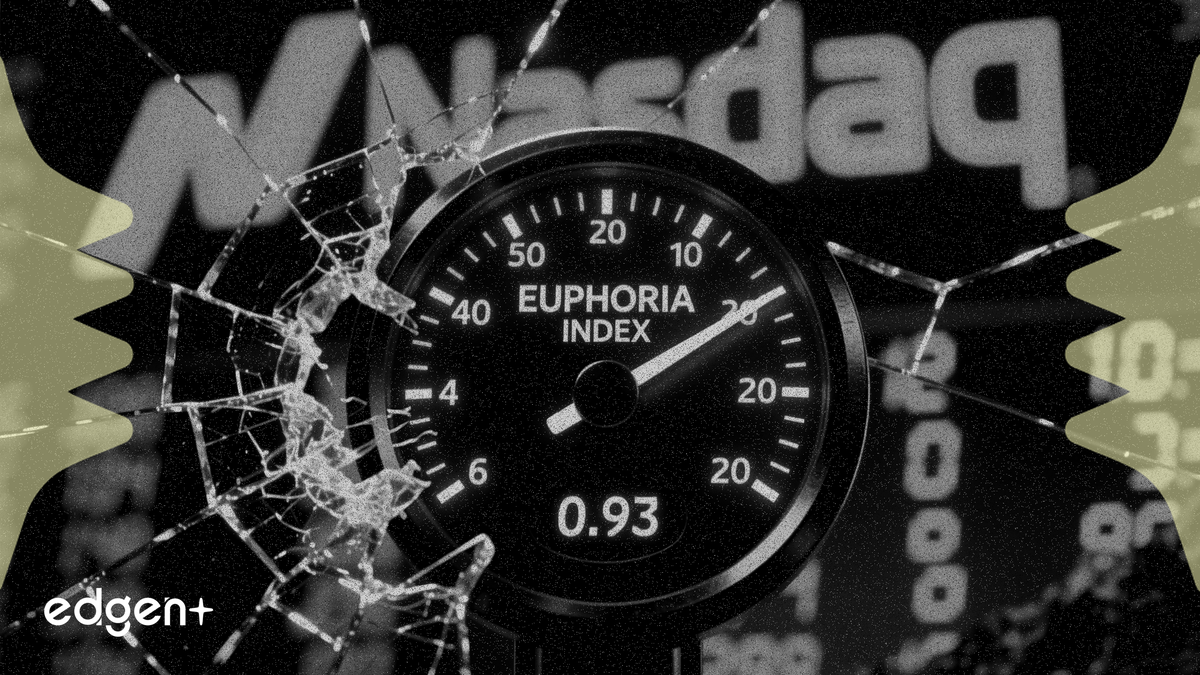
Citi's Levkovich Index has surged to levels last seen before the dot-com crash, yet the bank is raising its S&P 500 target to 8,100.
Citi's Panic/Euphoria Model climbed to 0.93 last week, its highest reading since the post-Covid rally and near levels that preceded the dot-com bubble burst. The gauge, renamed the Levkovich Index in 2021 after the late chief U.S. equity strategist Tobias Levkovich, measures nine inputs including margin debt, trading volume and short interest.
"The issue with using this as a timing tool is that the market is up more than it is down," said Scott Chronert, head of U.S. equity strategy at Citi. Stocks can "exist in euphoric conditions" until they have a concrete reason to fall, he said.
Readings above 0.38 signal euphoria, while anything below minus 0.17 signals panic. A year ago, the index sat at 0.19 — firmly in neutral territory. The S&P 500 has gained nearly 8 percent this year, with semiconductor stocks leading the charge. Micron Technology Inc., Intel Corp., Advanced Micro Devices Inc. and South Korea's SK Hynix Inc. have all more than doubled since January.
Historically, when the index reaches these levels, the S&P 500 has posted a median decline of 13 percent over the following 12 months. Yet Citi raised its year-end target for the benchmark to 8,100 from 7,700, implying roughly 7 percent upside from current levels. The new target values the index at a little more than 20 times Citi's 2027 earnings per-share forecast, reflecting confidence that profit growth driven by an AI spending "supercycle" will continue to outpace economic expansion.
Euphoria vs. Earnings Momentum
JPMorgan Chase & Co. noted that more leveraged single-stock exchange-traded funds were launched in the past year than for any other category, many tied to top AI names such as Sandisk Corp., Lumentum Holdings Inc. and IREN Ltd. These products use options to magnify returns, adding to the froth in a market where the Levkovich Index already signals extreme complacency.
Brian Kersmanc of GQG Partners, a value-oriented investor, said he is worried about what he called the "complete euphoria" for all things AI, though he conceded that "calling a top is extremely hard to do." His caution reflects a broader tension: the sentiment data suggests the market is overpriced and vulnerable to a correction, but the underlying earnings momentum remains strong.
The 10-year Treasury yield has moved in a range this year, while the U.S. dollar index has remained elevated, creating a cross-asset backdrop that has historically tempered equity valuations. Gold has rallied to record levels, signaling that some investors are hedging against the very scenario the Levkovich Index warns of: a sharp mean reversion in risk assets.
Chronert said the AI spending "supercycle" is still in its middle stages, suggesting that the earnings tailwind could persist even as valuation concerns mount. The tension between near-term euphoria and long-term profit growth leaves investors with a difficult choice: stay positioned for further gains or reduce risk ahead of a potential correction.
This article is for informational purposes only and does not constitute investment advice.
