
China's import growth accelerated to 21.5% in May, the fastest pace in months, pointing to strong domestic demand even as global supply chains face disruption from the Strait of Hormuz closure.
China's import growth accelerated to 21.5% in May, the fastest pace in months, pointing to strong domestic demand even as global supply chains face disruption from the Strait of Hormuz closure.
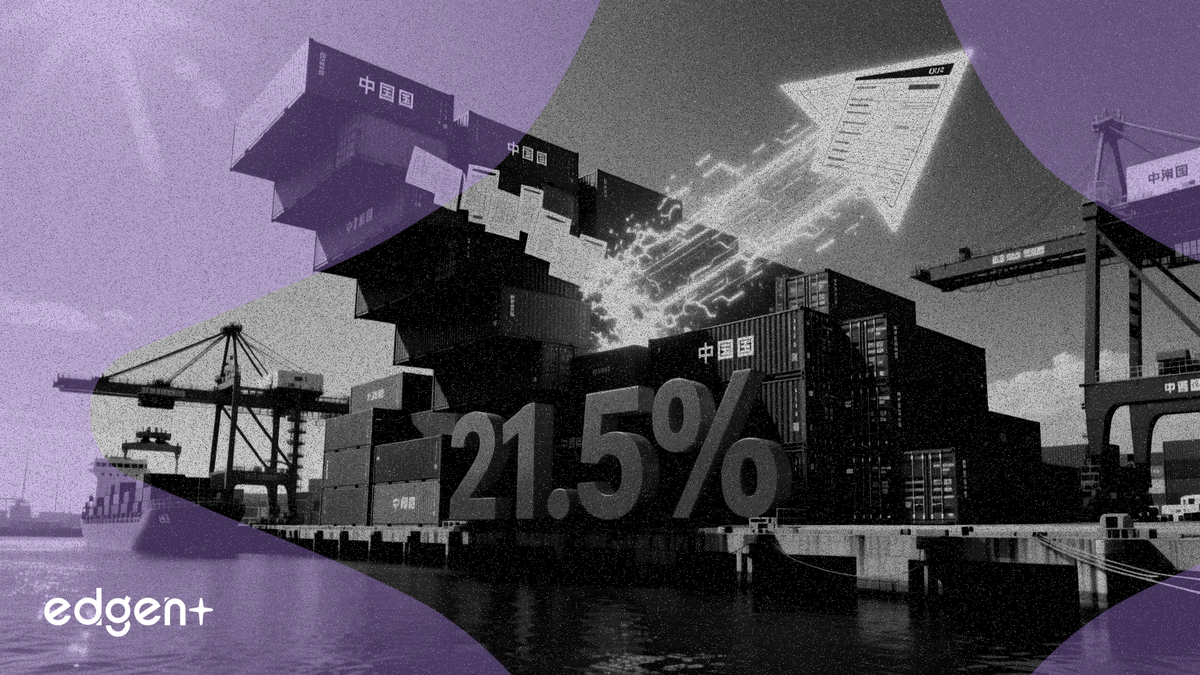
China's import growth accelerated to 21.5% in May, the fastest pace in months, pointing to strong domestic demand even as global supply chains face disruption from the Strait of Hormuz closure.
China's imports rose 21.5% in May from a year earlier in yuan terms, accelerating from April's 20.6% gain and pointing to strong domestic demand that could boost commodity prices from copper to crude oil while supporting emerging-market currencies.
"The acceleration in imports suggests China's industrial engine is still running hot despite global headwinds, and that will provide a floor under commodity markets," said Rachel Tang, a macro analyst covering China markets.
The May reading marks the second consecutive month of import growth above 20%, a streak not seen since early 2024. The strong data comes as the world's second-largest economy has sharply reduced seaborne crude imports — falling to 6.36 million barrels a day in May, the lowest in nearly a decade — in response to elevated prices after the Strait of Hormuz disruption that has shut roughly 13% of global supply since late February. Brent crude has retreated from a four-year high of $118 a barrel set in March to below $95, but the waterway remains largely closed after more than three months.
The divergence between surging import values and falling crude volumes reveals a key dynamic: China is paying more for less oil while boosting purchases of other raw materials and industrial inputs. That mix has implications for global trade flows, emerging-market currencies, and the pricing power of commodity producers from Australia to Brazil.
The import data strengthens the case for sustained demand for base metals. Copper, a bellwether for Chinese industrial activity, has drawn support from the import figures, with the metal trading near recent highs as traders price in continued buying from the world's top consumer. Iron ore, another key Chinese import, has also benefited from the demand outlook, while the offshore yuan strengthened against the dollar in early Asian trading following the release.
Yet the supply side tells a more complicated story. Beyond oil, the disruption at Saudi Arabia's Jubail petrochemical complex — struck by Iranian missiles in early April — has knocked out roughly 70% of the world's high-purity polyphenylene ether resin, a critical component for printed circuit boards used in everything from smartphones to autos. PCB prices have surged as much as 40% from March to April, according to Goldman Sachs, adding cost pressure to the electronics supply chain that China's factories depend on. Lead times for epoxy-resin inputs have expanded from three weeks to fifteen, according to supply chain experts at Wichita State University.
The last time China posted consecutive months of import growth above 20% was in early 2024, when the CSI 300 rallied 12% over the following quarter and the offshore yuan strengthened 2% against the dollar. A repeat would depend on whether Beijing can sustain demand without stoking inflation in a world where key supply routes remain compromised.
The strong import data gives the People's Bank of China more room to hold its policy stance steady. With domestic demand showing resilience, the case for aggressive monetary easing weakens, though the PBoC still faces pressure to support the property sector and local government financing. The 1-year medium-term lending facility rate, currently at 2.5%, is widely expected to remain unchanged at the next operation, with markets pricing limited easing in the second half of the year.
For global investors, the message is mixed: China's demand is strong enough to lift commodity prices, but supply constraints mean those higher input costs may not translate into proportional gains for Chinese industrial margins. The Hang Seng Index edged higher on the data, while the CSI 300 traded in a narrow range as traders weighed the demand signal against the supply-side headwinds. The next data point to watch is China's May trade balance and export figures, which will show whether the import surge is matched by export strength or widening the country's trade deficit.
This article is for informational purposes only and does not constitute investment advice.
