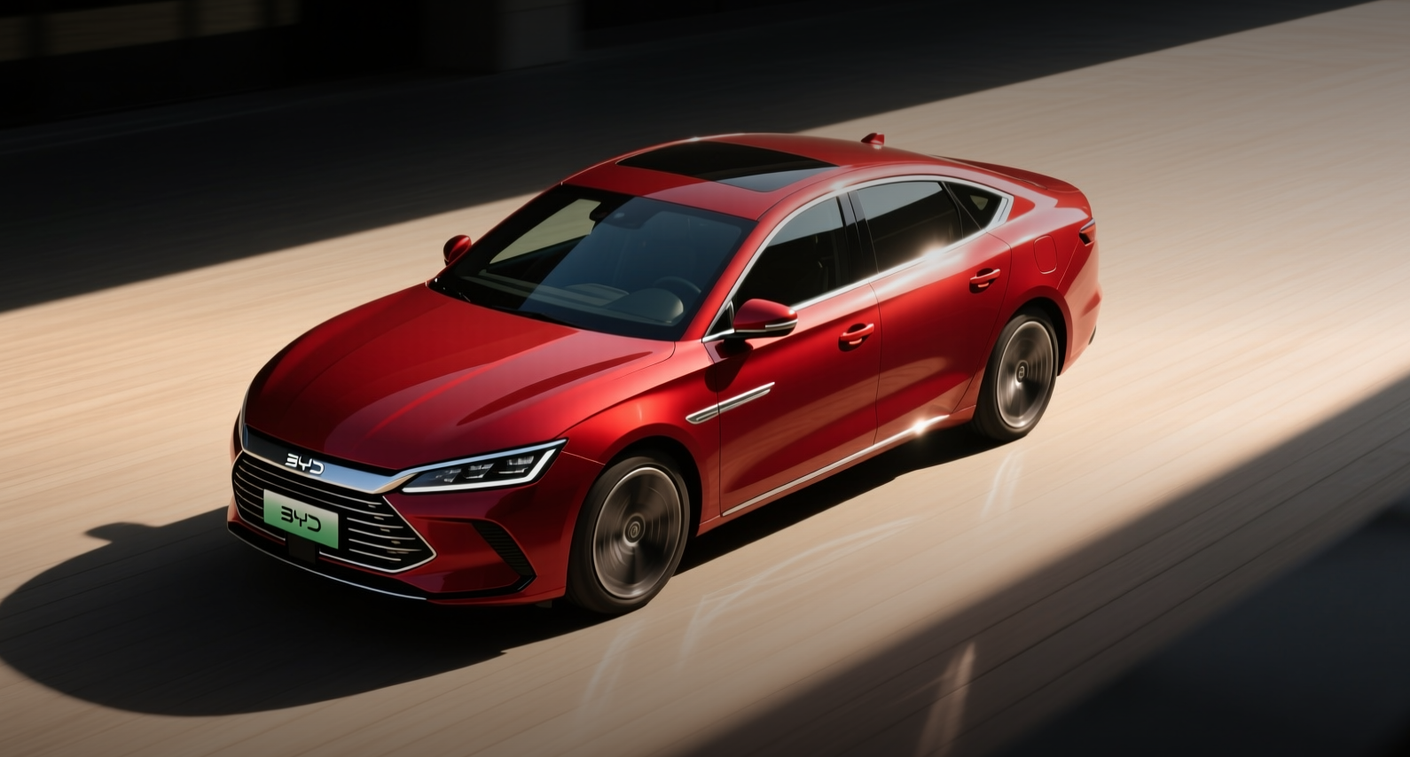
BYD delivered 557,090 battery-electric vehicles in the second quarter, enough to retake the global sales lead from Tesla by a margin of more than 160,000 units.
BYD Co. reclaimed the global battery-electric vehicle crown in the second quarter, delivering 557,090 units and widening its lead over Tesla Inc. as overseas expansion offset weak domestic demand in China.
"BYD's export push is the structural shift that changes the competitive math," said Lucas Herrera, energy transition analyst at Edgen. "The company is no longer just a China story — it's a global volume machine."
The figure, compiled by Bloomberg, compares with Tesla's expected deliveries of about 396,500 vehicles for the same period, based on analyst estimates. The gap of roughly 160,000 units reverses the standings from the first quarter, when Tesla narrowly led after BYD's domestic sales fell following China's removal of its EV purchase-tax exemption.
The widening gap shows a fundamental shift in the EV market: Tesla's volume growth has stalled while BYD's continues climbing, driven by aggressive expansion into Europe, Southeast Asia and Latin America. About 43% of BYD's second-quarter sales came from overseas markets, and it has told analysts it expects exports to reach 1.5 million vehicles in 2026.
How BYD Built the Gap
BYD's Q2 performance marks a sharp rebound from the first quarter, when it delivered fewer than 400,000 BEVs and lost the lead it had held through most of 2025. The reversal had little to do with Tesla surging — the US automaker delivered just 358,023 vehicles in Q1 and built more than 50,000 cars it could not sell, adding them to inventory.
The Chinese automaker's recovery was powered by exports. Overseas sales surged as BYD pushed into markets where Tesla has been losing ground. In Europe, BYD has now outsold Tesla for multiple consecutive months, including in Germany and France, the region's two largest EV markets, as Tesla's registrations continue to slide across the continent.
For the full year 2025, BYD sold 2,256,714 BEVs against Tesla's 1,636,129 — a lead of more than 600,000 units. The Q2 data suggests that gap is widening again. BYD's strategy of designing vehicles for cost reduction over time, using its Blade battery with lithium iron phosphate chemistry at an estimated $56 per kilowatt-hour, has allowed it to introduce new models while lowering production costs.
What Tesla's Number Will Mean
Tesla is scheduled to report official Q2 delivery figures on July 2. Wall Street's consensus sits at roughly 406,000 vehicles, while Bloomberg's estimate is closer to 396,500. Even at the higher end of expectations — some analysts project as many as 450,000 deliveries, citing fresh Model Y demand and the company's motivation to clear its Q1 inventory buildup — Tesla would still trail BYD by roughly 100,000 units.
The competitive pressure extends beyond volume. Tesla has not executed a major vehicle refresh in years, and its lineup is aging relative to a wave of new Chinese competitors including Nio Inc. and XPeng Inc., which have been launching models with advanced driver-assistance features and lower price points.
For investors, the implications are clear. Tesla's growth story in vehicles has stalled, and its valuation increasingly depends on robotaxis and robotics rather than car sales. BYD, meanwhile, continues to gain scale, with its overseas expansion providing a second growth engine as China's domestic market remains mired in an intense price war. BYD shares traded 7.7% higher in Hong Kong on the news.
This article is for informational purposes only and does not constitute investment advice.