


Key Takeaways:
- BYD built 7,018 flash charging stations across 325 Chinese cities as of end-June
- The Blade Battery 2.0 charges from 10% to 70% in five minutes
- BYD plans to deploy 20,000 flash chargers globally by end of 2026
Key Takeaways:
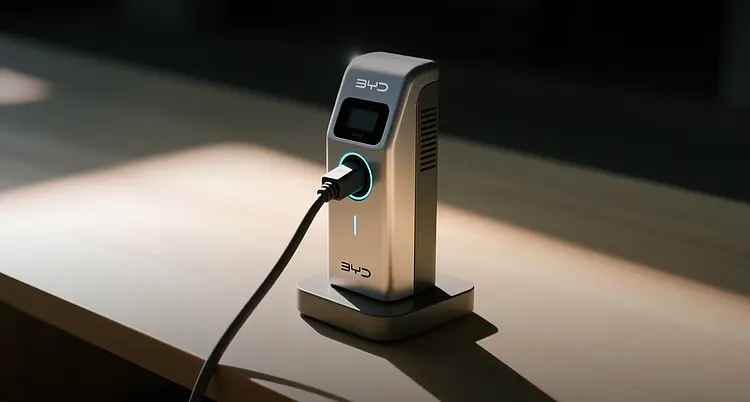
BYD's flash charging network now spans 7,018 stations across 325 Chinese cities, supporting its Blade Battery 2.0 technology that can charge an EV from 10% to 70% in five minutes.
BYD Co. built 7,018 flash charging stations across 325 Chinese cities as of end-June, adding 336 stations in the second half of the month alone, the company said in a statement. The expansion supports its next-generation Blade Battery 2.0, which uses lithium iron phosphate chemistry with a silicon-enhanced graphite anode to achieve 210 watt-hours per kilogram of energy density.
The Blade Battery 2.0 can complete a full charge in nine minutes and reach 10% to 70% charge in five minutes, even in temperatures as low as minus 30 degrees Celsius, according to BYD's published specifications. Each flash charging station is equipped with liquid-cooled cables and a 1,000-volt architecture capable of delivering up to 1.5 megawatts of power, with grid-load buffer batteries ensuring stability during peak usage. The battery carries a 5,000-cycle lifespan and a warranty covering up to 155,000 miles.
BYD shares rose 5.3% on July 2, with short-selling volume reaching HK$930.2 million, or 21.8% of total turnover. The charging network buildout gives BYD a structural advantage over rivals such as Nio Inc. and XPeng Inc., which rely on battery-swapping and third-party charging partnerships respectively. Nio operates roughly 2,700 battery-swap stations in China, while XPeng's fast-charging network remains below 2,000 stations.
BYD plans to deploy 20,000 flash chargers globally by the end of 2026, with expansion into Europe and the UK already underway. The company's vertically integrated model — producing both the battery cells and the charging infrastructure — allows it to control the full user experience, from energy density specs to charging speed, at a cost advantage over competitors that source batteries from suppliers such as Contemporary Amperex Technology Co. Ltd.
The Blade Battery 2.0 is available in two configurations: one optimized for high power and another for high energy density, giving BYD flexibility across vehicle segments from compact city cars to long-range SUVs. The battery's LFP chemistry offers superior thermal stability compared with nickel-manganese-cobalt alternatives, reducing the risk of thermal runaway — a key safety concern that has slowed EV adoption among price-sensitive Chinese consumers.
BYD trades at roughly 18 times forward earnings, a discount to Tesla's 55 times multiple, reflecting the market's gradual repricing of China's EV leader as both a carmaker and an energy infrastructure company. With 7,018 stations already live and a clear path to 20,000, the charging network is becoming a moat that competitors will find expensive to replicate.
This article is for informational purposes only and does not constitute investment advice.
