

The United States Brent Oil Fund (BNO) has surged 68% in 2026 on war-driven supply disruptions, but prediction markets now signal a high probability that a peace deal could erase those gains by June.
The United States Brent Oil Fund (BNO) has surged 68% in 2026 on war-driven supply disruptions, but prediction markets now signal a high probability that a peace deal could erase those gains by June.
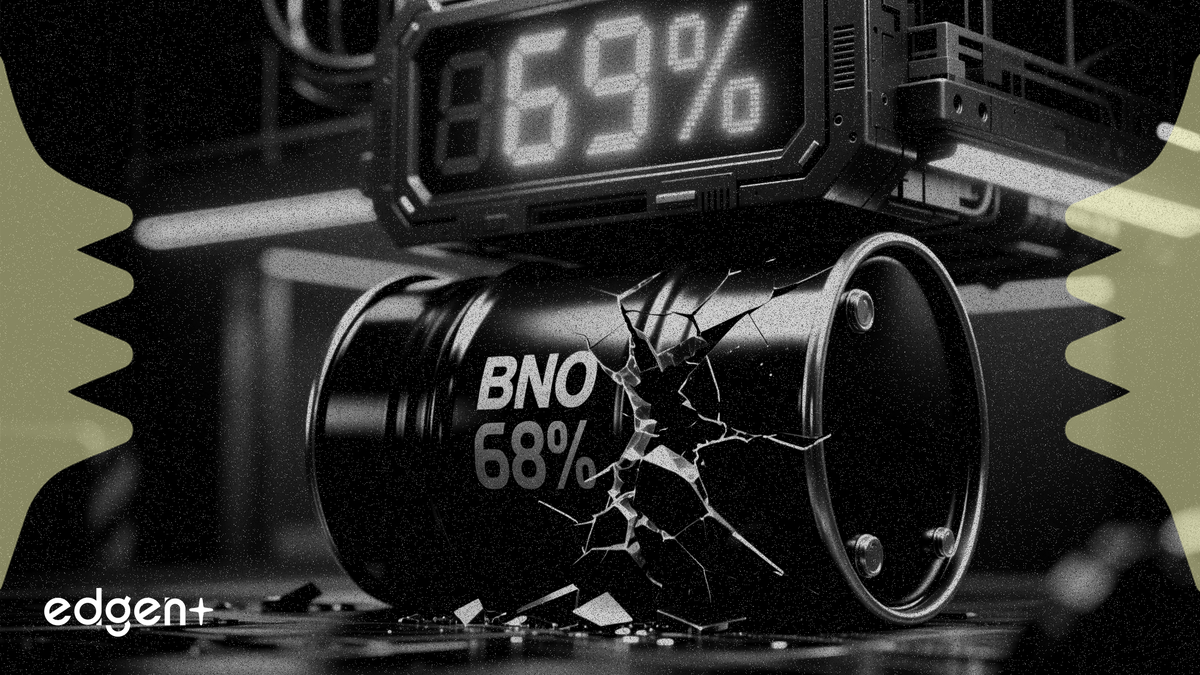
The United States Brent Oil Fund (NYSEARCA: BNO) is up 68% year-to-date, a rally built entirely on the geopolitical premium from the closure of the Strait of Hormuz, but the fund fell 11% in the past week as prediction markets priced in a 69% chance of a US-Iran peace deal by June 30.
"BNO is a single-commodity futures fund... Its entire 2026 return rests on the Hormuz staying disrupted," Omor Ibne Ehsan wrote for 24/7 Wall St. "A signed agreement that reopens the strait reverses gains, potentially violently."
The disruption, which began February 28 after a US-Israeli strike on Iran, took what the Center for Strategic and International Studies (CSIS) estimates is over 10 million barrels per day off the market for more than 50 days. The event sent the spot price of Brent crude from $61 at the start of the year to over $127. While front-month Brent futures have averaged $98 since the conflict began, the price for physical cargoes has averaged $111, a historically wide spread indicating severe stress on global refiners.
The core risk for investors is that BNO's gains are event-driven and fragile. A ceasefire that reopens the strait, through which about 20% of the world's oil passes, would likely cause the fund's value to collapse. Data from prediction market Polymarket shows the probability of a deal by May 31 has risen to 62%, with the odds for a deal by the end of June increasing from just 39% on April 13 to 69% as of April 25.
The divergence between futures contracts and the physical market highlights the acute nature of the supply shock. According to a CSIS analysis, the $13 average premium for physical "Dated Brent" over the front-month futures price since March 1 is exceptional. This gap suggests that while financial traders in the "paper" market are wary of a sudden peace deal causing prices to fall, physical buyers like refineries are desperate to acquire crude to keep operations running, bidding prices for immediate delivery far higher.
This dynamic indicates that even if a peace deal is signed and futures prices—which BNO tracks—fall sharply, consumers may not see immediate relief. The physical supply chain, including shut-in wells and tanker availability, could take months to normalize. As a result, prices for gasoline, diesel, and jet fuel are likely to remain elevated long after financial market volatility subsides.
Investors use BNO as a tactical tool to get direct exposure to international crude prices, which has been highly effective during the Hormuz closure. The fund tracks near-month Brent futures contracts, making it more sensitive to seaborne disruptions than funds based on West Texas Intermediate (WTI) crude. The current market "backwardation"—where near-term contracts are more expensive than later-dated ones—has also provided a tailwind for the fund's performance.
However, outside of these acute supply shocks, the fund's structure presents challenges for long-term holders. In a normal "contango" market, the fund must continuously sell cheaper expiring contracts to buy more expensive future ones, creating a persistent drag on value known as "roll loss." Furthermore, as a limited partnership, BNO issues a Schedule K-1 tax form, which can add complexity for investors in taxable accounts.
This article is for informational purposes only and does not constitute investment advice.
