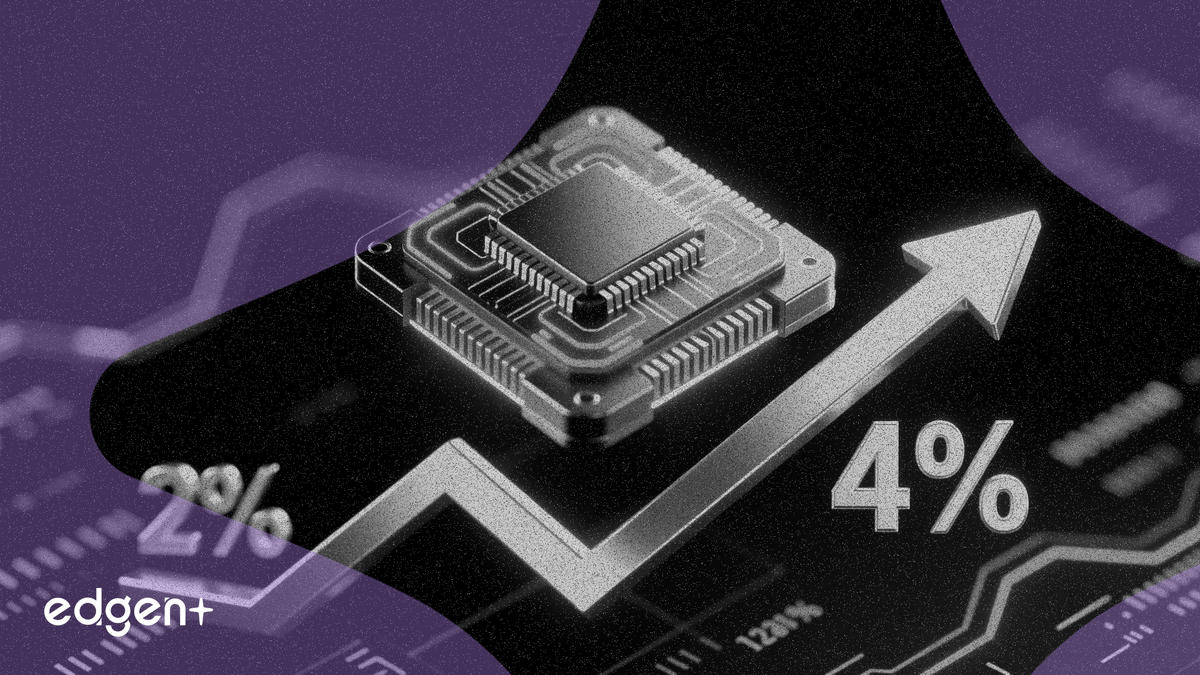
Bernstein analyst Mark Newman named Rigetti Computing and Infleqtion as top quantum computing picks, arguing current valuations imply only 4% and 2% long-term market share respectively. Both companies are set to receive $100 million in federal funding. Newman favors the two for their strong risk/reward profiles in a sector dominated by larger players.
"Current valuations imply only about 4% and 2% long-term market share, respectively," Newman, an analyst at Bernstein, said. "If either ultimately captures a larger market opportunity, the upside could be meaningful."
Rigetti, which uses superconducting quantum technology, delayed its next-generation Cepheus-1-108Q system in January but announced general availability in April. The Berkeley, California-based company secured new customers including an unnamed technology manufacturer and an Indian research institution after recording no system sales in 2025. Infleqtion, which pursues a neutral-atom approach, debuted through a SPAC merger in mid-February and is providing quantum hardware to the International Space Station through a NASA cargo mission. Both companies are set to receive $100 million in federal funding in exchange for equity stakes.
Rigetti shares fell 9.53% while Infleqtion dropped 7.43% in recent trading. The two smaller players compete against larger names including IonQ and IBM in a sector where the U.S. government recently made a $2 billion bet on quantum technology.
Newman's endorsement stands out as contrarian given the scrutiny Rigetti has faced from other analysts over its revenue tied to milestone-based research and development contracts. Infleqtion, with a shorter public track record, has drawn attention for its quantum sensors and atomic clocks with national security applications.
Rigetti reported first-quarter revenue of $4.4 million with an operating loss of $26 million, though it ended the quarter with $569 million in cash and no debt. Infleqtion reported trailing 12-month revenue of $9.46 million with a net loss of $30.26 million and a market capitalization of about $3.93 billion.
The analyst's thesis suggests both stocks offer a relatively cheap way to bet on leading quantum modalities. Investors will watch for milestone progress on the $100 million federal funding agreements and any new customer wins that could shift the implied market share calculation.
This article is for informational purposes only and does not constitute investment advice.