

Key Takeaways:
- American Airlines suspends six routes as jet fuel hits $142 a barrel
- Fuel costs have surged 67% since February's U.S.-Israeli strikes on Iran
- Iberia, JetBlue and European carriers also cutting capacity or raising fares
Key Takeaways:
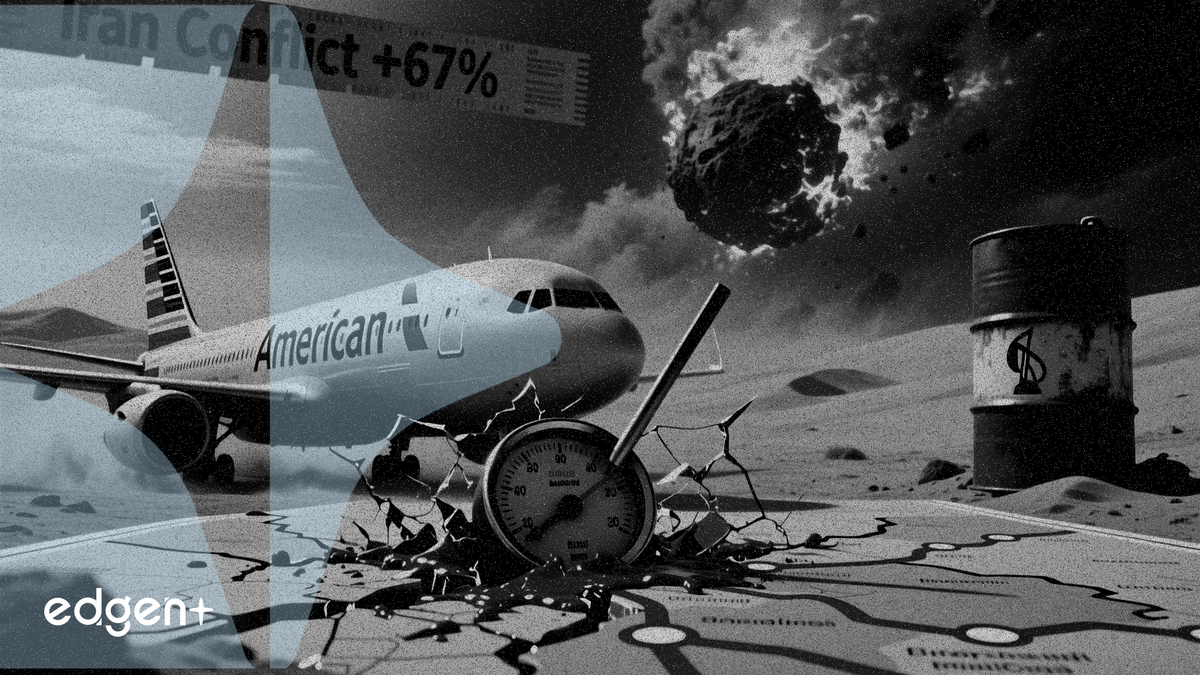
American Airlines became the latest carrier to slash capacity as jet fuel prices hover near $142 a barrel, more than 60% above pre-conflict levels.
The Iran conflict's fourth month of shipping disruptions in the Strait of Hormuz pushed jet fuel to $142 a barrel, forcing American Airlines to suspend six routes as carriers across the globe grapple with fuel costs that have surged 67% since February.
"Fuel is the single largest variable cost for airlines, and this magnitude of spike leaves carriers with no choice but to cut capacity," said Helane Becker, airline analyst at TD Cowen. "The longer the Strait remains disrupted, the more route suspensions we will see."
Jet fuel averaged $85 to $90 a barrel before the U.S. and Israeli strikes on Iran in February, according to the International Air Transport Association. By late May, it had climbed to roughly $142 — a level that has prompted airlines globally to hike fares, add baggage fees and reduce flight frequencies. American's six suspended routes add to a growing list of cuts that includes Iberia's Madrid-Havana service, suspended from June 1 through Oct. 24, and JetBlue's reduced capacity plans. JetBlue last week raised its second-quarter fuel cost forecast to $4.26 to $4.36 per gallon, up from an earlier range of $4.13 to $4.28.
The route suspensions signal that higher fuel costs are now reshaping airline networks, not just fare structures. Smaller carriers face the most acute pressure given limited financial flexibility, but even larger operators like American are being forced to recalibrate. With the Strait of Hormuz — a conduit for nearly a fifth of global oil and gas supplies — remaining disrupted and no diplomatic resolution in sight, the industry faces sustained cost pressure through at least the peak summer travel season.
Fuel Costs Cascade Through Global Aviation
The impact extends beyond American. British Airways, Air France and Lufthansa have all delayed or rerouted Dubai flights as the Middle East conflict disrupts airspace and fuel supply chains. Iberia suspended its Madrid-Havana route for nearly five months, citing a drop in demand exacerbated by Cuba's fuel shortages under the U.S. blockade. The Spanish carrier had already been forced to make a technical stop in Santo Domingo for refueling on return flights from Havana since February.
JetBlue, which operates a predominantly domestic U.S. network with less pricing power than larger rivals, said it expects to recapture 40% or more of increased fuel costs in the second quarter through consistent operational performance. The carrier raised its revenue growth per available seat mile forecast to a range of 9% to 12%, from 7% to 11% previously, suggesting some ability to pass costs to passengers. Still, it suspended its full-year outlook in April and said it planned to slow hiring and cut capacity.
The $57-a-Barrel Shock
The magnitude of the fuel price increase is historically severe. Jet fuel at $142 a barrel represents a $52-to-$57 premium over pre-conflict levels — a cost swing that, for a major U.S. carrier consuming roughly 3 million to 4 million gallons of fuel daily, translates into tens of millions of dollars in additional monthly expenses. The last comparable spike occurred in 2022 after Russia's invasion of Ukraine, when jet fuel briefly topped $160 a barrel before retreating as refining capacity adjusted.
The current disruption differs in that it targets a physical chokepoint rather than a producing nation. The Strait of Hormuz handles about 20 million barrels of oil and petroleum products daily, and its closure has tightened not just crude supplies but also refined product markets, including jet fuel. U.S. jet fuel spot prices have tracked the global benchmark higher, leaving American carriers with limited hedging protection after many reduced their hedging programs in recent years.
What Comes Next
Airlines face a binary outlook. If the Strait reopens through a diplomatic resolution or military de-escalation, fuel costs could fall sharply, potentially reversing the route cuts and fare increases. If the disruption persists into the third quarter, when summer travel demand peaks, carriers may need to announce additional capacity reductions and further fare hikes to preserve margins.
American Airlines said last week it expects strong demand to cushion the hit from rising fuel costs, echoing a similar assessment from JetBlue. But with Brent crude also elevated and refining margins for jet fuel remaining wide, the pressure on airline profitability is unlikely to ease quickly. The next key data point will be the U.S. Energy Information Administration's weekly inventory report, which will show whether jet fuel stockpiles are drawing down faster than seasonal norms.
This article is for informational purposes only and does not constitute investment advice.
