

Amazon's shopping app will now generate AI images of products that do not exist, using fake photographs to guide shoppers toward real inventory.
Amazon's shopping app will now generate AI images of products that do not exist, using fake photographs to guide shoppers toward real inventory.
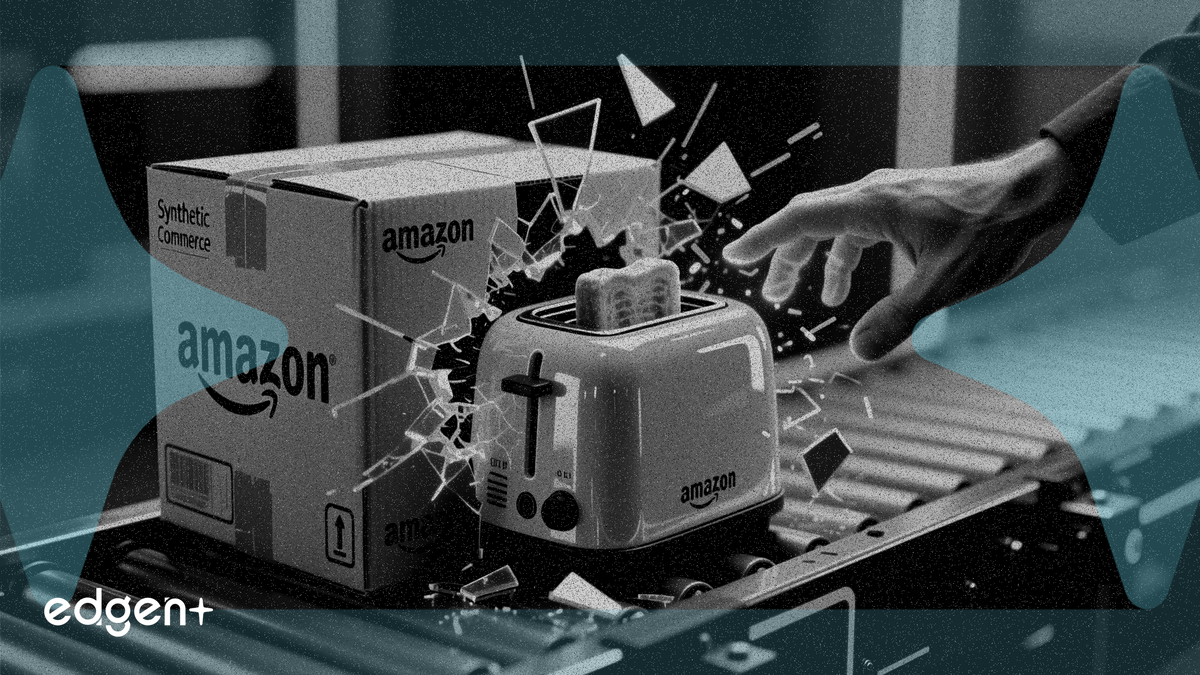
Amazon's shopping app will now generate AI images of products that do not exist, using fake photographs to guide shoppers toward real inventory.
Amazon is deploying generative AI to create images of products that are not for sale, using synthetic photographs as visual search cues to steer shoppers toward real inventory — a move that prioritizes engagement over clarity in the company's $600 billion-plus e-commerce business.
"This bridges the gap between a customer's imagination and product discovery," an Amazon spokesperson said in a blog post announcing the feature.
Available now to US customers on iOS and Android, the tool generates images in the search bar as users type descriptive terms such as "cowl neck" for a draped-collar shirt or "rattan" for woven furniture. Tapping an AI-generated image redirects shoppers to visually similar products that are actually for sale. The feature initially covers apparel and home categories, with more to follow.
The rollout marks Amazon's third AI shopping tool this year, following AI-generated shoppable collages and the replacement of its Rufus chatbot with Alexa for Shopping. The company is spending heavily on AI integration across its e-commerce platform, betting that generative features will lift conversion rates and average order value.
Why generate fake products when real ones exist?
The feature has drawn immediate skepticism. On Reddit, early reactions questioned why a retailer with millions of real product photographs would generate artificial ones. The concern is straightforward: shoppers who click an AI-generated image expecting to find that exact item may face disappointment when the product does not exist in inventory.
Amazon's approach differs from conventional visual search tools. Google Lens and Pinterest Lens match user photos against real product catalogs. Amazon's system inverts the process — it generates a synthetic image from text, then uses that image to query its own inventory. The extra step adds potential confusion without a clear improvement in search accuracy, according to early user feedback.
The feature joins a growing suite of AI tools inside the Amazon Shopping app. Amazon Lens Live scans real-world objects through a phone camera to find visual matches. A "more like this" shortcut surfaces similar products from any listing. The company also added text-to-image search, allowing users to pair a photo with a descriptive phrase. Amazon already summarizes customer reviews using AI and generates short podcast-style audio descriptions for select items.
Who wins, who loses
Amazon's aggressive AI push reflects a broader arms race in e-commerce search. Google Shopping has integrated generative AI into its product listings, and Shopify's Shop app offers AI-powered visual discovery. Amazon's advantage lies in its catalog depth — more than 350 million products — but generating fake images risks eroding trust if shoppers cannot distinguish AI content from real inventory.
Amazon shares trade at roughly 22 times forward earnings. The company does not break out AI feature costs separately, but its total 2026 capital expenditure is expected to exceed $75 billion, much of it directed at AI infrastructure. If generative search features lift conversion rates by even 1 percentage point, the impact on Amazon's $245 billion in annual merchandise sales would be material. The risk is that confusing shoppers slows purchase decisions instead of accelerating them.
This article is for informational purposes only and does not constitute investment advice.
