

Alibaba Group placed its artificial intelligence operations under direct CEO oversight by merging two research units into a new Token Foundry business.
Alibaba Group placed its artificial intelligence operations under direct CEO oversight by merging two research units into a new Token Foundry business.
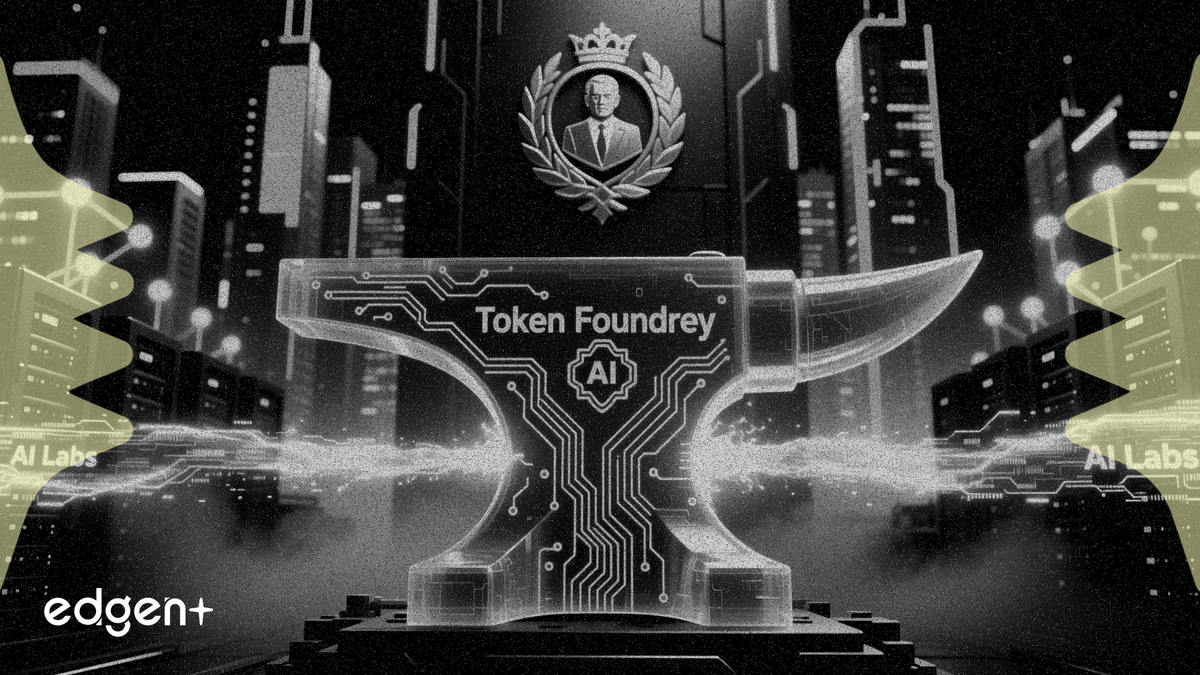
Alibaba Group placed its artificial intelligence operations under direct CEO oversight by merging two research units into a new Token Foundry business.
Alibaba Group shares fell 0.5% as the company merged its Tongyi large-model business and Future Life Lab into a Token Foundry unit directly overseen by Chief Executive Eddie Wu, accelerating efforts to turn AI research into revenue beyond e-commerce.
"Eddie Wu will directly oversee the Token Foundry unit because AI monetization is central to Alibaba's growth strategy," the company said in a statement. Zhou Jingren was appointed chief scientist to lead the newly created Alibaba AI Future Research Institute, focusing on advanced AI breakthroughs.
Zheng Bo will lead teams from Happy Horse and Happy Oyster into the Token Foundry unit, the company said. The restructuring involves multiple AI businesses across Alibaba's ecosystem, which includes cloud computing, logistics, and entertainment. Short selling in Alibaba's Hong Kong-listed shares reached $1.38 billion, or 13.8% of turnover, on the day of the announcement.
The reorganization positions Alibaba to compete more aggressively with Baidu Inc. and Tencent Holdings Ltd. in China's large language model race, where the government has designated AI as a national priority. The Token Foundry name also hints at potential tokenization or blockchain integration, a move that could appeal to both enterprise clients and crypto investors as Alibaba seeks new growth drivers during a sluggish Chinese economy.
The merger of Tongyi — Alibaba's answer to OpenAI's GPT — with Future Life Lab, which focused on consumer-facing AI applications, creates a unified command structure for the company's AI ambitions. Tongyi had been Alibaba's flagship large language model, competing directly with Baidu's Ernie Bot and Tencent's Hunyuan model.
Alibaba's cloud division, which accounts for about 10% of group revenue, has been a primary distribution channel for Tongyi's enterprise AI services. By consolidating AI development under a single business unit with direct CEO oversight, Alibaba aims to accelerate product development cycles and reduce duplication across its various business groups.
The appointment of Zhou Jingren as chief scientist shows a deeper commitment to foundational AI research. Zhou will lead the Alibaba AI Future Research Institute, tasked with exploring next-generation AI architectures and training methodologies. The institute's mandate includes advancing Alibaba's Qwen model family, which has been benchmarked against Meta Platforms Inc.'s Llama and Mistral AI's open-source models.
For investors, the restructuring raises questions about Alibaba's AI spending trajectory. The company has not disclosed its AI-specific capital expenditure, but Chinese tech giants collectively spent an estimated $30 billion on AI infrastructure in 2025, much of it on Nvidia Corp.'s H100 and B200 graphics processors. Alibaba's cloud unit is among China's largest buyers of Nvidia chips, though US export restrictions have forced the company to develop domestic alternatives with partners like Huawei Technologies Co.
Alibaba trades at about 10 times forward earnings, a discount to US peers like Amazon.com Inc. at 35 times, partly reflecting regulatory uncertainty and slower growth in China. The Token Foundry restructuring could help narrow that gap if it accelerates AI revenue growth, analysts said.
This article is for informational purposes only and does not constitute investment advice.
