
Three Federal Reserve officials on Thursday explicitly raised the possibility of interest rate increases for the first time in this cycle, as inflation pressures from tariffs and the Iran war push price growth further above target.
Three Federal Reserve officials on Thursday explicitly raised the possibility of interest rate increases for the first time in this cycle, as inflation pressures from tariffs and the Iran war push price growth further above target.
Three Federal Reserve officials on Thursday explicitly raised the possibility of interest rate increases for the first time in this cycle, as inflation pressures from tariffs and the Iran war push price growth further above target.
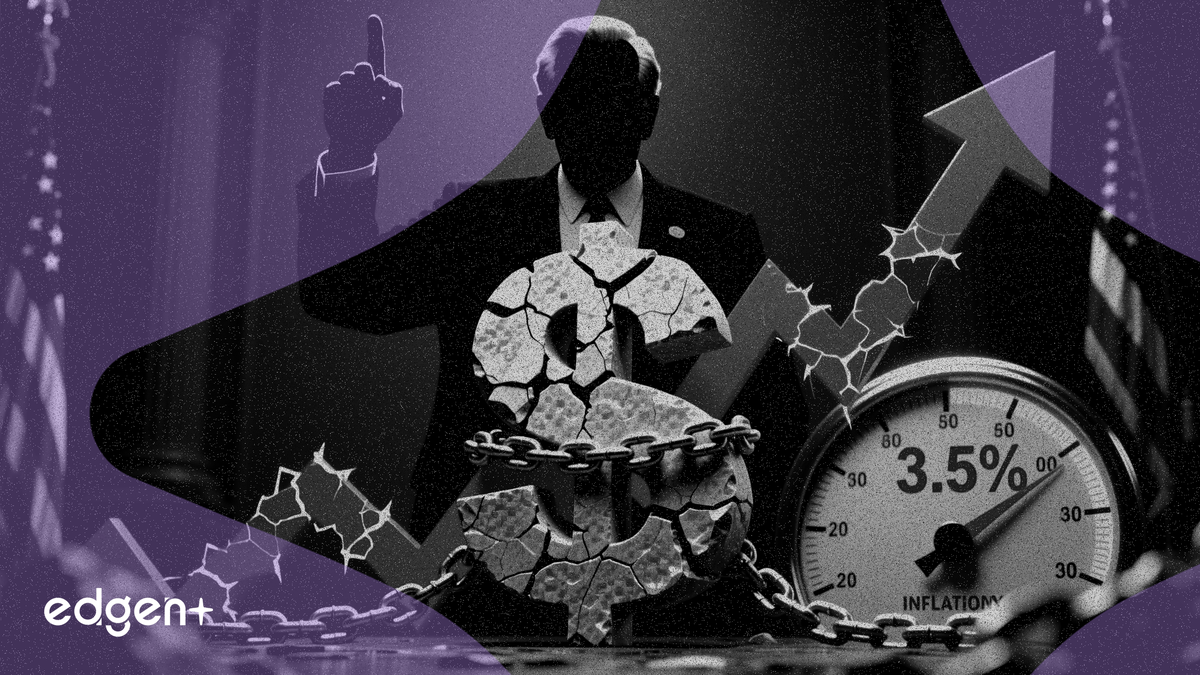
Three Federal Reserve officials publicly raised the prospect of rate hikes Thursday, with Kansas City Fed President Jeffrey Schmid explicitly putting a 25 to 50 basis point increase on the table as inflation hovers near 3.5%, well above the central bank's 2% target.
"The big question is whether we remain patient or whether we should act — raise rates 25 or 50 basis points and see if we can push inflation down," Schmid said at an economic forum in Oklahoma. He called inflation "the No. 1 risk" facing the U.S. economy and made no mention of rate cuts, a sharp departure from earlier this year when most officials treated easing as the baseline.
San Francisco Fed President Mary Daly, speaking at a Bloomberg technology conference, said the central bank is "prepared for two-way rate moves" and warned that providing forward guidance now "could end up being misleading" given the uncertainty around the economic outlook. Richmond Fed President Thomas Barkin said the labor market appears balanced, with no signs of "bubble-like tightness." The remarks come as the federal funds rate sits at 3.5% to 3.75%, unchanged since a quarter-point cut in December. April's personal consumption expenditures price index — the Fed's preferred inflation gauge — rose 3.8% from a year earlier, the largest increase since 2023.
The hawkish shift sets the stage for new Fed Chair Kevin Warsh's first policy meeting on June 16-17, where the central bank is expected to hold rates steady but could remove language signaling a bias toward easing. Futures markets now price a meaningful probability of a rate hike by year-end, a dramatic reversal from the three cuts investors had anticipated entering 2026.
The coordinated messaging from three regional Fed presidents — Schmid, who will gain a vote in 2028, and Daly and Barkin, who vote in 2027 — reflects a rapidly hardening consensus inside the central bank. Schmid attributed the inflation overshoot to tariffs and energy price spikes following the outbreak of the Iran war, which has pushed crude prices sharply higher and fed through to fertilizer, equipment and other input costs.
Daly identified the same drivers, noting that tariffs and the rise in energy and food prices since the Iran war began are the primary forces keeping inflation elevated. She said artificial intelligence is unlikely to affect the inflation outlook within the central bank's 12-month policy horizon, though it could become a disinflationary force in five to 10 years.
Rate path in focus as dot plot looms
The Fed's quarterly Summary of Economic Projections, due at the June meeting, will offer the clearest signal yet of the committee's shifting views. The March dot plot showed a median expectation for one more cut this year and another in 2027. Soundings from officials since then suggest the 2026 cut is likely to disappear, and some analysts expect the 2027 projection to follow.
"The old Warsh would bring forward rate hikes," said Tim Duy, chief U.S. economist at SGH Macro Advisors, referring to Warsh's long-standing reputation as a monetary hawk. "No one knows which Warsh will be on stage."
The uncertainty extends beyond the dot plot. Warsh has expressed skepticism about forward guidance and could move to scrap the projections entirely, a step his predecessor Jerome Powell — who remains on the board — has also supported. Removing the easing bias and eliminating the dot plot would leave markets to navigate rate expectations based solely on incoming data, a shift that could amplify volatility in the second half of the year.
Labor market resilience complicates the calculus
One of the few arguments for keeping rates on hold has been the risk that cracks in the labor market could widen. But recent data suggests the opposite. Job openings jumped sharply in April, and private payrolls rose by 122,000 in May, above forecasts. The national employment report for May, due Friday, will provide the next test.
Goldman Sachs' U.S. financial conditions index has fallen to its loosest level in four years, driven by the stock market surge tied to the artificial intelligence investment boom, while Citi's U.S. economic surprise index sits at its most positive in three years. That combination — loose financial conditions and above-target inflation — has historically prompted central banks to tighten.
Carlyle Group strategist Jason Thomas drew a parallel to the late 1990s, when the Fed cut rates into a concentrated capital expenditure boom. "Rate cuts delivered during a concentrated capex boom tend to prove far more stimulative than rate cuts arriving in other circumstances," he said. With real short-term interest rates now more than 300 basis points below where they stood during the dot-com era, Thomas argued it is "long past time to abandon the endemic easing bias."
This article is for informational purposes only and does not constitute investment advice.
